You have published the books.
You have paid for editing, covers, formatting, and ads. You may have a growing backlist and years of experience behind you.
And your books are selling but is this a publishing business supporting the books?
And why does the business still feel as if it could stall the moment Amazon sales slow down?
When sales slow, it is easy to publish another title or try another marketing tactic. But if your books are not connected by a clear audience, brand, and reader journey, publishing more titles may only create more work.
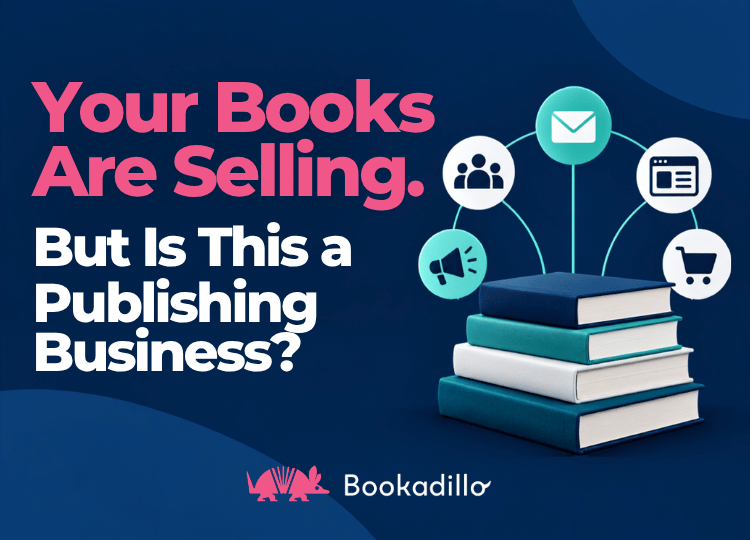
The short answer. A publishing business needs more than publishable books. It needs a connected catalog, a recognizable brand, a way to reach readers again, a system that nurtures those readers, and sales channels working toward the same goal.
You do not have to build all of that at once. But do you know which part is missing?
Are you building a catalog or collecting books?
A catalog is more than a list of titles under the same KDP account.
Each book should have a purpose. One may introduce new readers to your work. Another may take them deeper into the subject. A workbook, companion guide, or bundle may give the same reader a useful next step.
When the books do not support one another, every release has to find its own audience from the beginning..
Before planning your next title, ask:
- Who is this book for?
- What does it add to the catalog?
- Which existing title or audience can support it?
- If the reader enjoys it, what should they discover next?
If you cannot answer those questions, you may need a clearer ecosystem for the books you already have..
What Callisto Media can teach us about scale
Callisto Media became one of the fastest-growing independent publishers in the United States by using consumer data to find nonfiction topics people were already searching for. At one point, Callisto was reportedly analyzing around 60 million pieces of consumer data each month and bringing some books to market in as little as nine weeks.
But volume did not make the business untouchable.
- In 2022, Callisto laid off 140 employees, around 35% of its workforce. Management said it needed to reduce spending and show investors a clearer path to profitability.
- In 2023, Callisto’s publishing assets were sold to Sourcebooks through an acquisition funded by Penguin Random House.
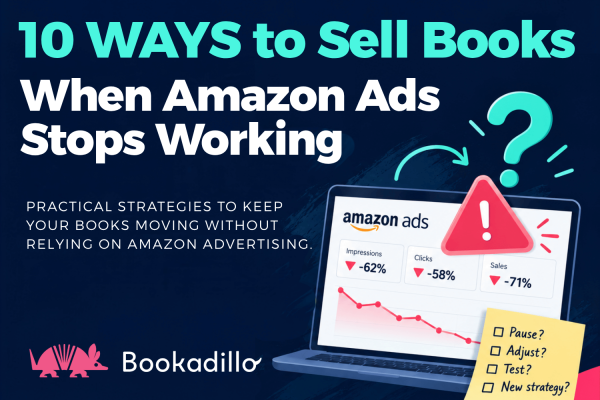
Callisto’s situation was complex. However, one publishing professional familiar with the business described a relevant vulnerability: Amazon Ads had become a primary sales engine. When advertising slowed or stopped, sales did too. The books reached buyers without necessarily building loyalty to the publisher behind them.
Its story raises an important question: If producing a large volume of market-informed books automatically created a sustainable publishing business, why was scale not enough?
More books can create more revenue. They can also create more costs, complexity, and dependence on the channels supplying demand.
Before you scale your output, strengthen the business that has to support it.
Do readers recognize the business behind the books??
Your brand is not only your logo or website design. It is the expectation people form when they encounter your work.
Who do you help? What can readers expect from your books? Why should they remember your name instead of only one title?
Try completing this sentence:
“We publish books for people who want to…”
If you cannot finish it clearly, an unclear brand may be making every book and piece of content work harder.
What happens after someone finishes your book?
A reader buys your book, finishes it, and likes it. Then what?
If their only next step is to search for you on Amazon or hope the algorithm shows them another title, the relationship ends almost as soon as it begins.
An author website and permission-based email list give readers somewhere to continue. You might offer a checklist, worksheet, template, bonus chapter, or short guide related to the problem your book solves.
But collecting subscribers is only the beginning. Without regular communication, even a large list can sit underused.
A nurtured email list can help you understand what readers need, test ideas before investing in them, generate recurring sales, and introduce related offers beyond books. Its value comes from the relationship you build, not the subscriber count alone.
Check the back matter of your strongest title. Is there a clear next step? And once someone subscribes, do you give them a reason to return?
Is your marketing helping, or just giving you more to do?
Social media can open a deep rabbit hole. Before long, you may be creating content and keeping accounts active without knowing whether any of it is helping the business.
You do not need to be everywhere. You need to know where your readers spend time, what you want them to do next, and how you will know whether the channel is working.
Before committing to another marketing activity, complete this sentence:
“We are doing this because it helps the right readers…”
If you cannot finish it clearly, you may need permission to stop doing work that is not moving the business forward.
Take the five-minute publishing business check
Give yourself a score from 0 to 2 in each area:
- Catalog: Do your books support one another?
- Brand: Do readers understand and remember what you publish?
- Audience: Can interested readers stay connected with you?
- Nurture: Is there a clear journey after someone subscribes?
- Marketing and distribution: Does each channel perform a specific job?
Use this scale:
- 0: This does not exist yet.
- 1: It exists, but it is incomplete or inconsistent.
- 2: It works and is being maintained.
Look at where you scored zero. That is probably the gap making another part of the business harder than it needs to be.
You found the gap. What happens next?
Identifying the missing piece is useful. Knowing how to build it, and where it fits with everything else, is harder.
This is why we created Bulletproof Publishing, a 12-week course for self-publishers who already have books within the same niche and want to build a stronger business beyond Amazon KDP.
The course walks you through your publishing ecosystem, brand, website, subscriber journey, social strategy, promotion, and wider distribution in the order each part supports the next.
This article helped you identify what may be missing. The course helps you build it.
Start with the gap you found. Then build the system around it, one clear step at a time.