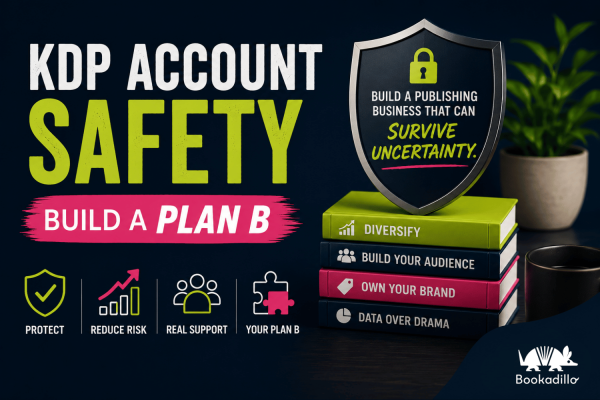
The Case for Diversifying Your Income Streams
For years, Amazon KDP has been the golden ticket for self-publishers. Massive reach, built-in audience, and the ability to generate real income from your books. But there’s a growing reality many authors are starting to face—and it’s not a comfortable one.
Amazon can shut down your income overnight. And increasingly, it’s not even a human making that call.
The Rise of AI-Driven Audits
Amazon’s auditing systems have become more aggressive, especially heading into late 2025 and beyond. What used to feel like occasional compliance checks now feels like constant surveillance.
The key shift? AI.
These audits are largely driven by bots running algorithmic checks on your account activity. They’re scanning for patterns, flags, and “suspicious behavior”—often without context. There’s no nuanced understanding, no conversation, no benefit of the doubt.
We wrote about it how Amazon’s algorithm detects the behavior of your books specific to the reviews process.
And when something gets flagged, you’re not entering a fair review process.
You’re entering a system where you are guilty until proven innocent.
My Experience: From One Amazon KDP Blocked Book to Losing All 3 Book Versions
In Q4 2025, one of my books was blocked for “review manipulation.” No detailed explanation. No clear evidence. Just a notification and removal of the eBook. This is the email Amazon KDP sent:
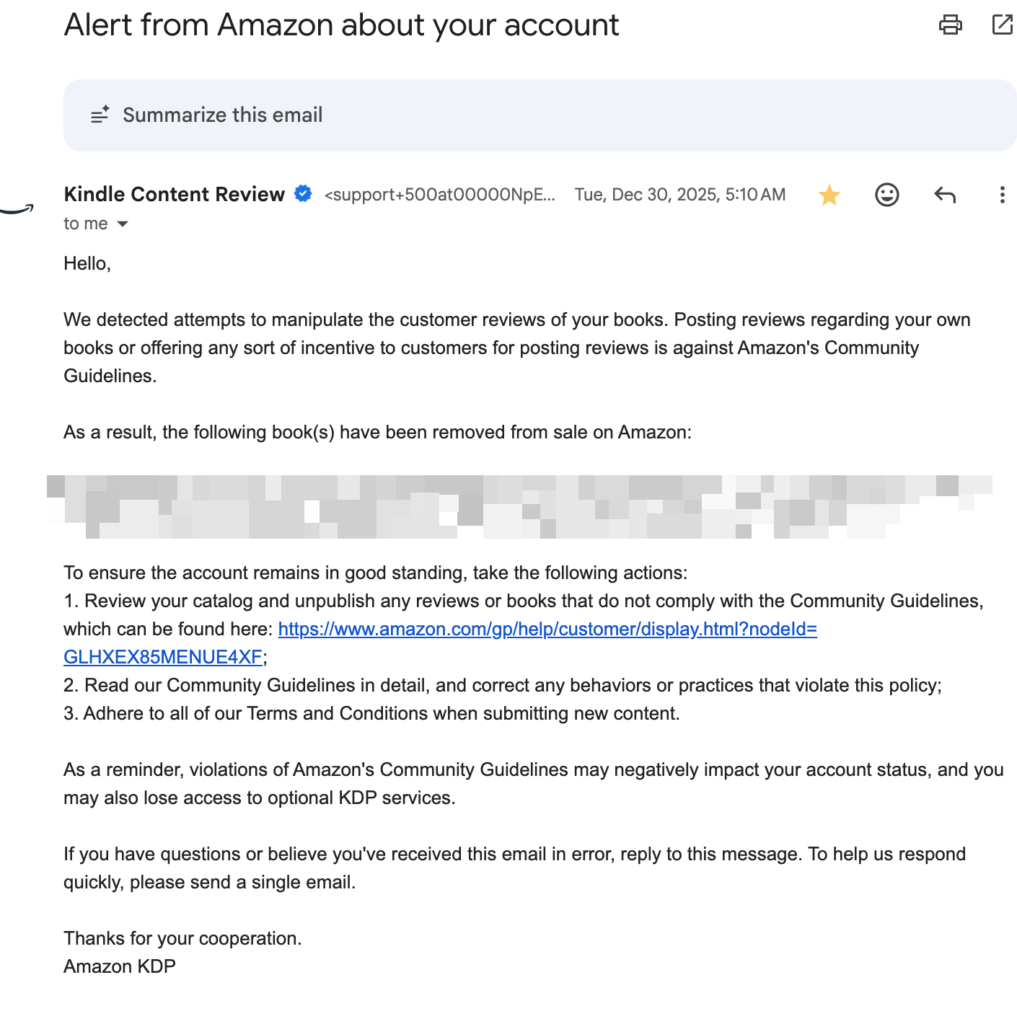
Frustrating—but I assumed it could be resolved, eventually. It was Q4 and I was busy marketing my other books so I just ignored the email and went about my business.
Four months later, I reached out to Amazon KDP support asking if I could republish the eBook version. Instead of getting clarity or assistance, I got something else entirely.
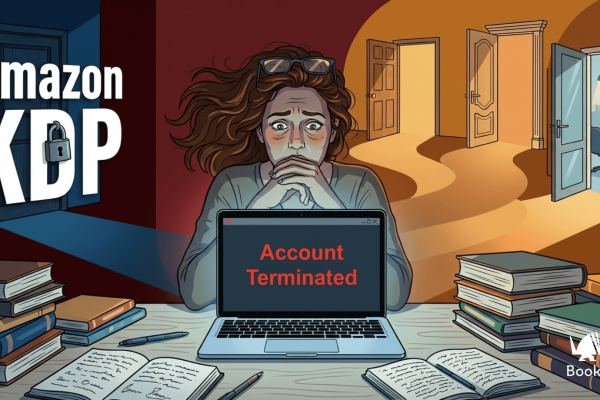
They blocked everything
eBook. Paperback. Hardcover. All versions gone.
No warning. No escalation. Just a complete shutdown.
I hired a KDP-focused lawyer to intervene and formally request a human audit. The goal was simple: get an actual person to review the case.
The result?
Exactly the same.
No reinstatement. No meaningful discussion. Just templated responses and a cold, faceless system that wouldn’t budge.
What a Year in the Amazon KDP Ecosystem Taught Me
After a year navigating this ecosystem—and experiencing its downsides firsthand—there are a few hard truths I’ve come to accept:
- There are other options out there
Amazon may dominate, but it’s not the only game in town. Platforms like direct sales, alternative marketplaces, and emerging publishing ecosystems are real, viable paths. - Amazon is too big to fail—and acts like it
When a platform reaches Amazon’s scale, accountability changes. Decisions are automated. Appeals are limited. And individual authors have very little leverage. - Relying on one income stream is risky
Your books are assets. But if all those assets live inside one platform, you don’t truly control them. You’re renting access—not owning distribution.
This Isn’t Just Me
As I write this, the team at Bookadillo shared something with me: within our small community of a few hundred self-publishers who were learning self-publishing from scratch, 17 accounts have been terminated.
Seventeen.
These aren’t bad actors. These are everyday authors—people building legitimate businesses around their work. I personally know self-publishing authors who write kids and Christian books whose accounts have been terminated. In Reddit self-publishing communities, the numbers are in the hundreds, if not thousands.
That number should be a wake-up call.
The Harsh Reality of Platform Dependency
Yes, Amazon offers incredible reach. It can generate significant income. For many authors, it’s the primary revenue driver because it offers a pool of millions of customers ready to buy all within one convenient platform.
But that comes with a trade-off
Amazon also has the power to turn off that income stream instantly—and completely.
No gradual decline. No warning period. Just zero.
If your entire publishing business depends on that one pipeline, you’re exposed.
The Case for Going Wide
This experience has forced me to rethink everything.
Diversification isn’t just a growth strategy—it’s a survival strategy.
This means:
- Expanding into multiple distribution channels.
- Building direct relationships with readers.
- Exploring platforms beyond Amazon.
- Treating your books like a portfolio and assets.
- You’re not just a writer, you own a publishing business. Start thinking like one.
Because at the end of the day, control matters.
My personal philosophy is, if I’m going to fail, I want to fail due to my own doing. Not because of someone or something else causing it.
Final Thoughts
This isn’t about abandoning Amazon. It’s about understanding the risks of over-reliance.
Amazon is powerful—but it’s not stable in the way many authors assume.
If anything, what’s happening right now is a clear signal: the rules are changing, audits are tightening, and automation is replacing human judgment.
For me, this has been a wake-up call.
And if you’re building your publishing business today, it should be one for you too.
Go wide. Protect your assets. And don’t let a single platform decide your entire future.
I’ll be sharing more on the avenues and platforms I’ll be distributing my books to in upcoming blog posts as I keep learning the ropes.
Disclosure: As an advisor to the team at Bookadillo, I don’t have access to client accounts or information and I’m unable to answer any client related questions. if you have questions specific to entrepreneurship and/or self-publishing You can reach me through our contact form.